Monday, February 27, 2012

MAR & Sea Floor Spreading


If you have a computer lab or smartboard available to your class you could use this website to have students label continents, mid ocean ridges, and to answer questions about ages of rock by continent and in the ocean.

Wednesday, February 15, 2012

End of TWS

Today is the last day of instruction for my teacher work sample. We'll be doing stations to cover different concepts from our unit.


My learning goals were centered around:

  • density
  • fronts and air masses
  • severe weather
  • weather stations/weather maps
  • relative humidity
Fronts & Air Masses is a worksheet

Severe weather is an online game or (if computers don't work) a tracking of a hurricane

Weather Stations will be tested on the computer using this site and a worksheet

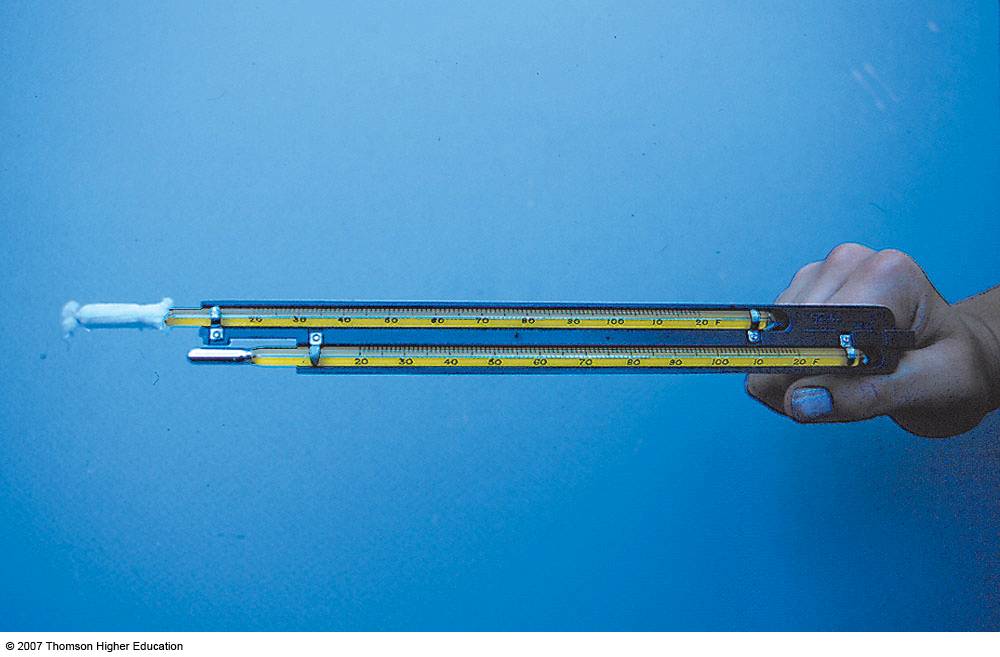
Relative Humidity station will have students using two thermometers to measure dry and wet bulb temperatures then read a humidity chart. 

I also have a study guide that syncs up with my test pretty well that students will be doing when they finish at a station early. 

Wednesday, February 8, 2012

Relative Humidity: How to Read a Psychrometer

{via}

Tomorrow I'm teaching about relative humidity and one of the instruments I want to talk about is a psychrometer, which measures relative humidity. As one who has never used a psychrometer before, the idea of trying to explain one to students was a little bit daunting. For future use (for myself and you!) I highly recommend checking out this National Park Service site. They have excellent step-by-step directions for the general public and it really helped me get it down for my lesson.

Wednesday, February 1, 2012

A Little About Me (from another perspective)

{via}

Student teaching has been a constant reminder that I am in that awkward professional stage. To others in the field I am young and merely a student, yet to those that I teach I am a teacher and an authority. It's quite strange. I wanted to share with you some of the things I have been asked in the past three weeks:
  • (by a teacher) Are you a new student?
  • (by a student) Are you Mr. Host's substitute?
  • Are you a JMU professor?
  • Do you have a kid? (to which I responded "Do you mean a human child? No!")
  • Are you Mr. Host's wife? 
  • Will you be our teacher next year?
  • So will you be teaching us until Mr. Host returns in March? (when a student assumed that because I was present, my host teacher must be leaving).
It's really quite strange to be seen as an adult by students. Do I really look like I could have a child? I have never been asked before if I have a kid and it was quite unnerving! 


Monday, November 7, 2011

Scoop.It

I am constantly on the lookout for useful websites when it comes to education and science. My most recent favorite is Scoop.It which allows you to bookmark sites in a magazine format. As a Twitter-lover I am a big fan of Scoop.It. You can follow topics such as "Science Education" or "Inquiry-Based Learning" or if you're looking for a personal bookmarking site it's great for that too.

You can check out my page here.

Keep it up for your PLC (Professional Learning Community).

Tuesday, November 1, 2011


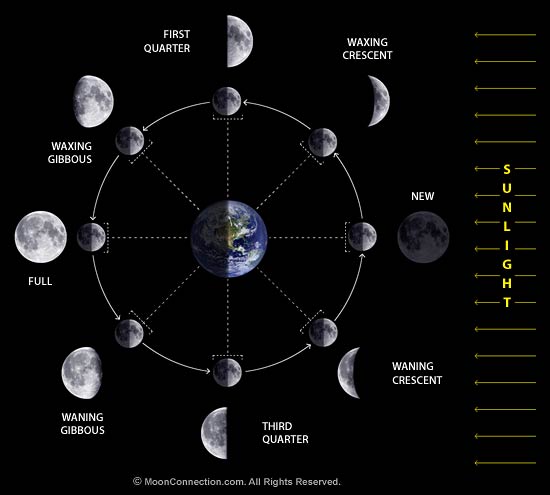
Yesterday the Astronomy class I am working with was covering the phases of the moon. I suspect that a lot of people in society don't really understand why we have phases of the moon. Contrary to popular belief it is not the Earth blocking out sunlight from the moon. In fact, it is just where the moon is in relation to the sun and the Earth. Basically, half of the moon is always light and half is dark, there are phases because from our vantage point on Earth we see only a certain amount of the light or dark sides at any given time. To get a visual:


Notice in the inner circle each moon is half lit by the sunlight (coming from the right side of the picture). You can see the phases we see at each location of the moon though. This is a good time to clear up any misconceptions your students have about the moon!

Faculty In-Service


Yesterday I went to my first faculty in-service. Basically for the students it was a day off from school and faculty all had a PD day. All the teachers in the county went to a local high school and went to different sessions throughout the day. My schedule consisted of one 'just for fun' class (glass blowing) and classes in differentiation, technology, working with students who have emotional disorders, tree identification (hello science teachers!) and the new teacher evaluation model. All in all it was a great experience for me as a first timer. It was very nice to meet so many other teachers in the county too.